# Face Identification: How It Works
The [homepage](https://digercules.com/) mentions the face-identification module briefly: a multi-prototype gallery, human confirmation. Here's what's left out of that summary.
## The multi-prototype gallery
A single averaged portrait recognizes someone poorly once years have passed between photos, or lighting and angle have changed. The gallery instead keeps several reference photos per person — and keeps growing as the review progresses, so accuracy improves over time instead of staying fixed after the first pass.
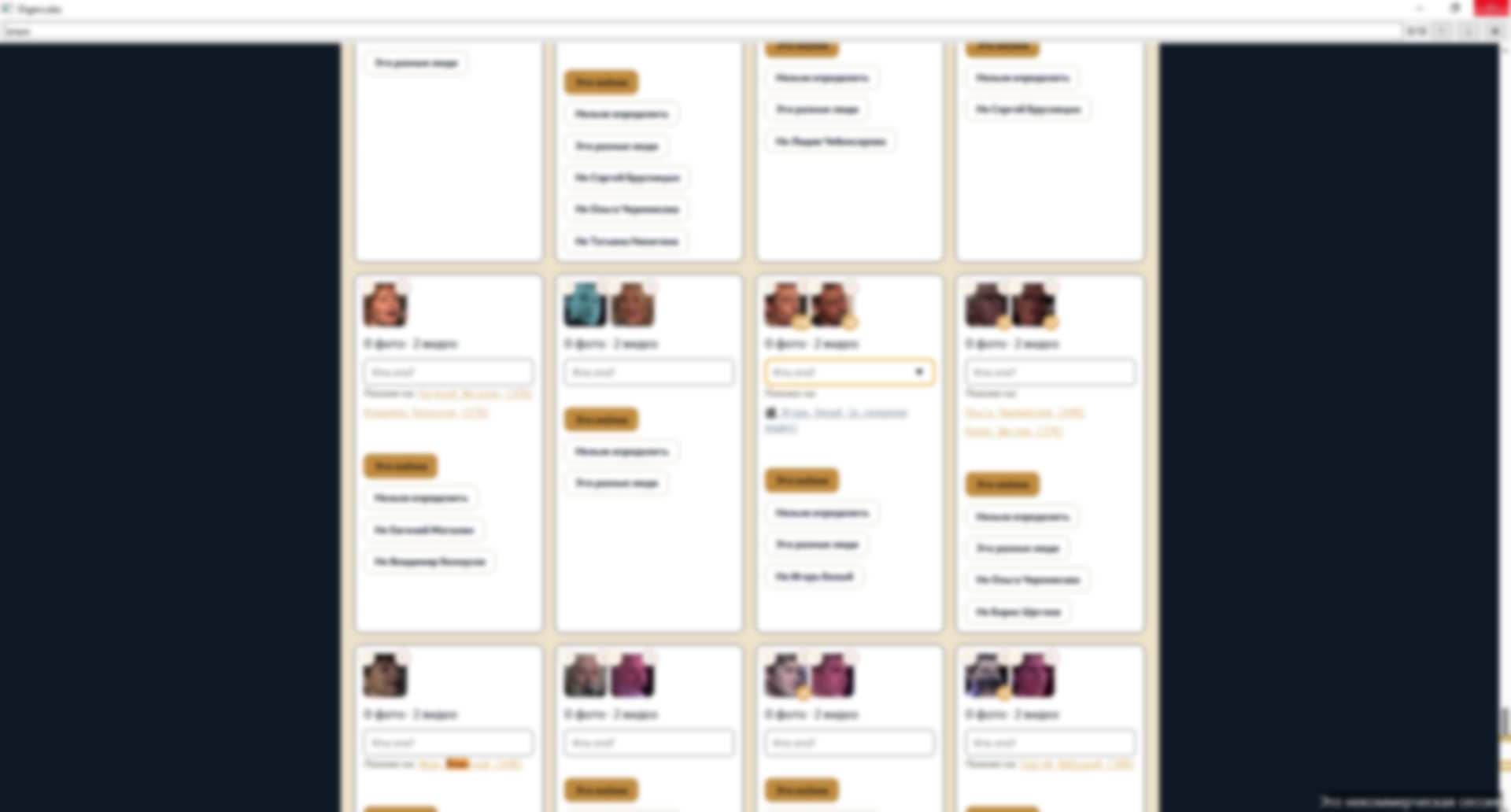
The system suggests a match with a similarity score and a reference photo for comparison — a person confirms or rejects it.
## Why the decision is always the person's
Face similarity is a probabilistic estimate, not a fact. On a real archive of upward of twenty thousand detected faces, a meaningful share of the matches the system scores as very similar still get rejected once a person actually checks them, and occasional confirmations show up even among weak matches. That means there's no safe threshold past which automatic confirmation can be trusted — and the interface doesn't hide it: there's no bulk-confirm button for a strongly matched group, only bulk-reject for a weak one.
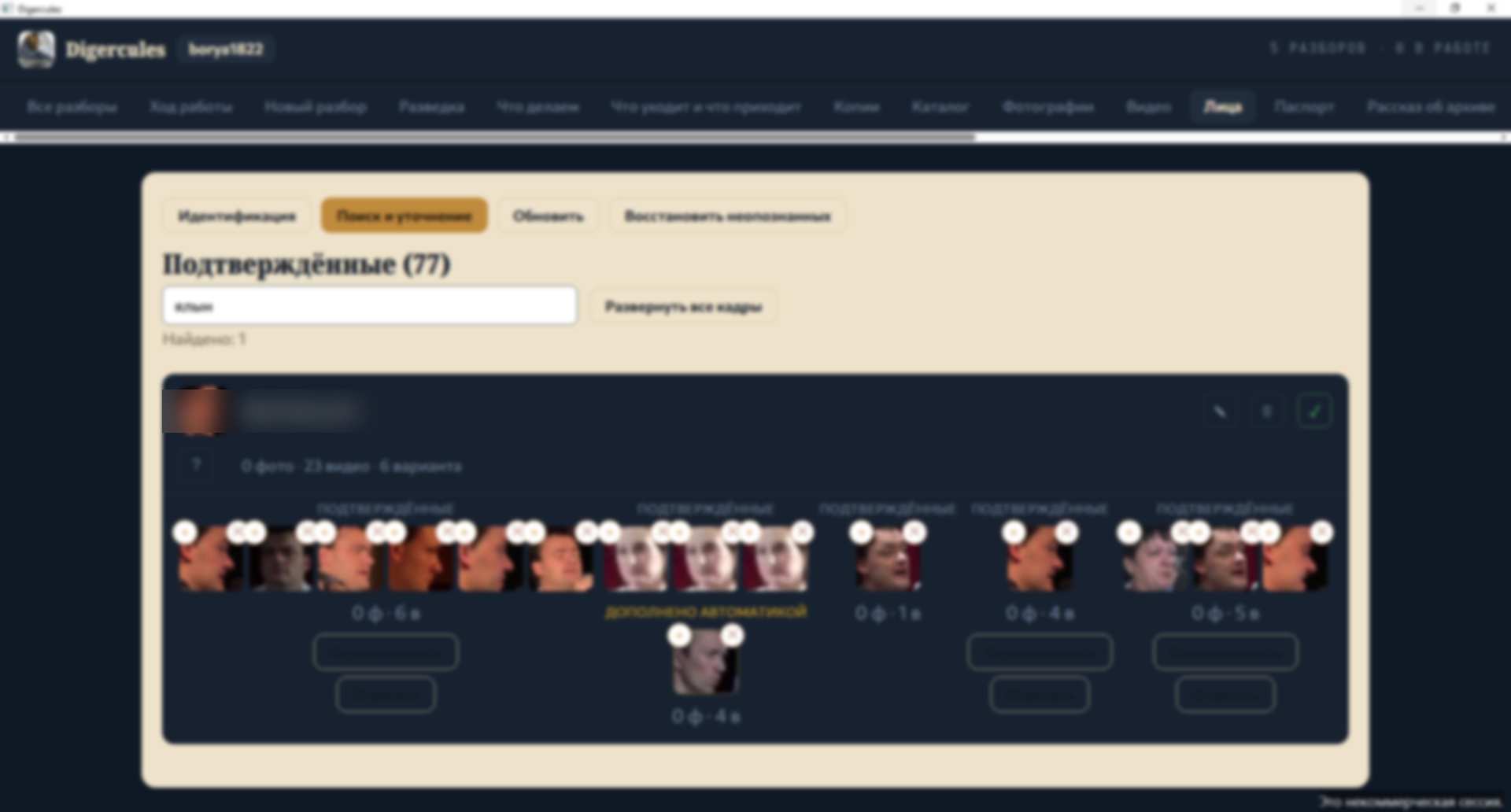
Every confirmed appearance of one person's face, grouped by video — a result you can check and revisit.
## The decision log
Every confirmation and every rejection gets recorded instead of overwriting the previous state. The result is always recalculated from the full history, so at any point you can see not just the current outcome but the path to it. An undone decision is a new entry recording the undo — not erased history.
## The method's honest limit
Face similarity doesn't substitute for personal acquaintance. You can't ask the system "who is this" about someone nobody doing the review has ever actually seen — there's no correct answer for it to give. For those cases there's a "needs a second opinion" status: the card isn't passed off as identified and isn't lost — it waits for whoever knows the archive better.
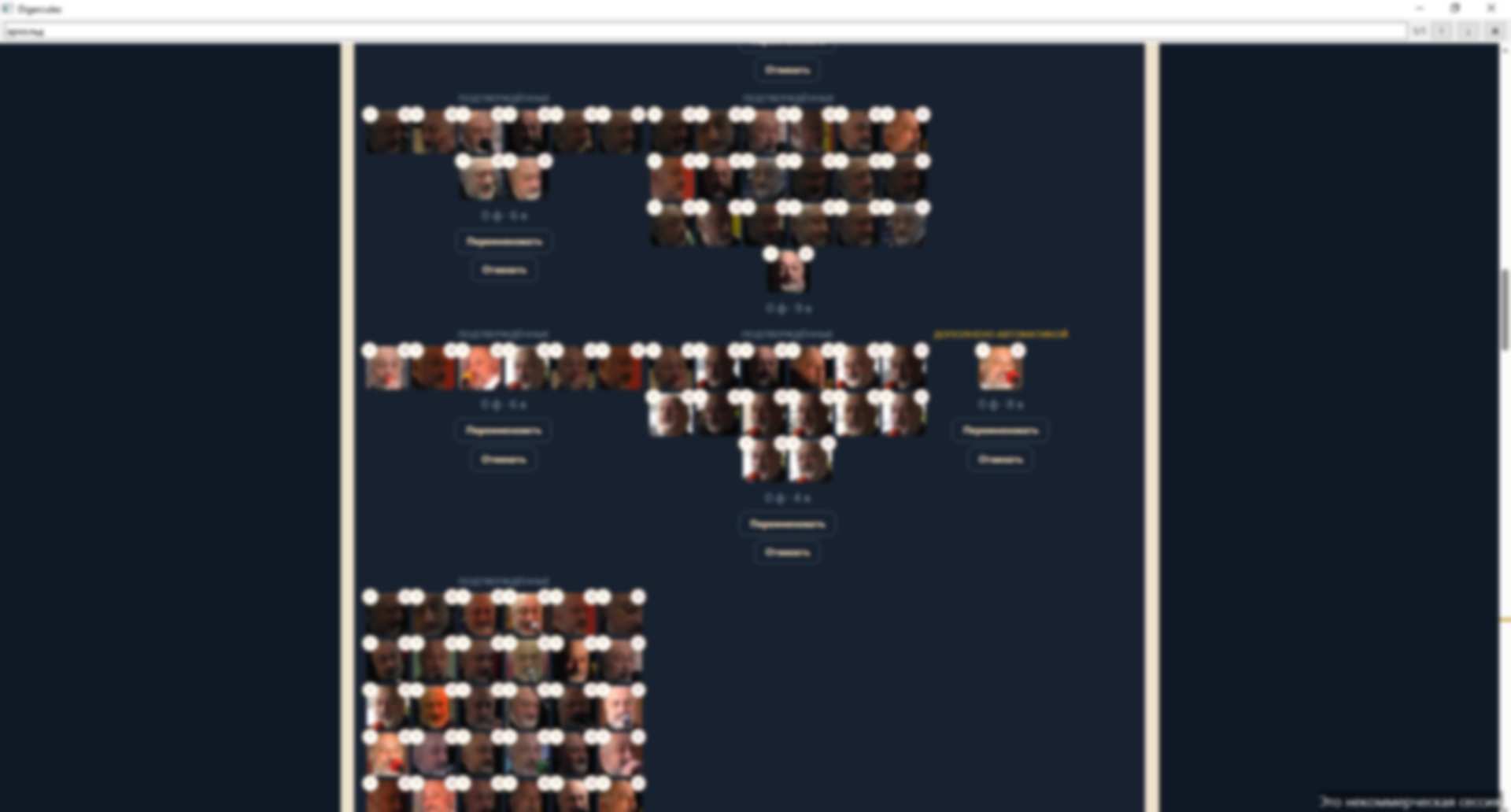
Scale, on one real archive: hundreds of recognized face variants, auto-grouped and human-refined.
## Proven
The confirmation screen and everything above have been proven on 20 TB of real concert video footage — not a demo dataset. More on where this module is already at work in the product: [digercules.org](https://digercules.org/face-identification/) for organizations, [digercules.net](https://digercules.net/inherited-archive/) for inherited archives.